
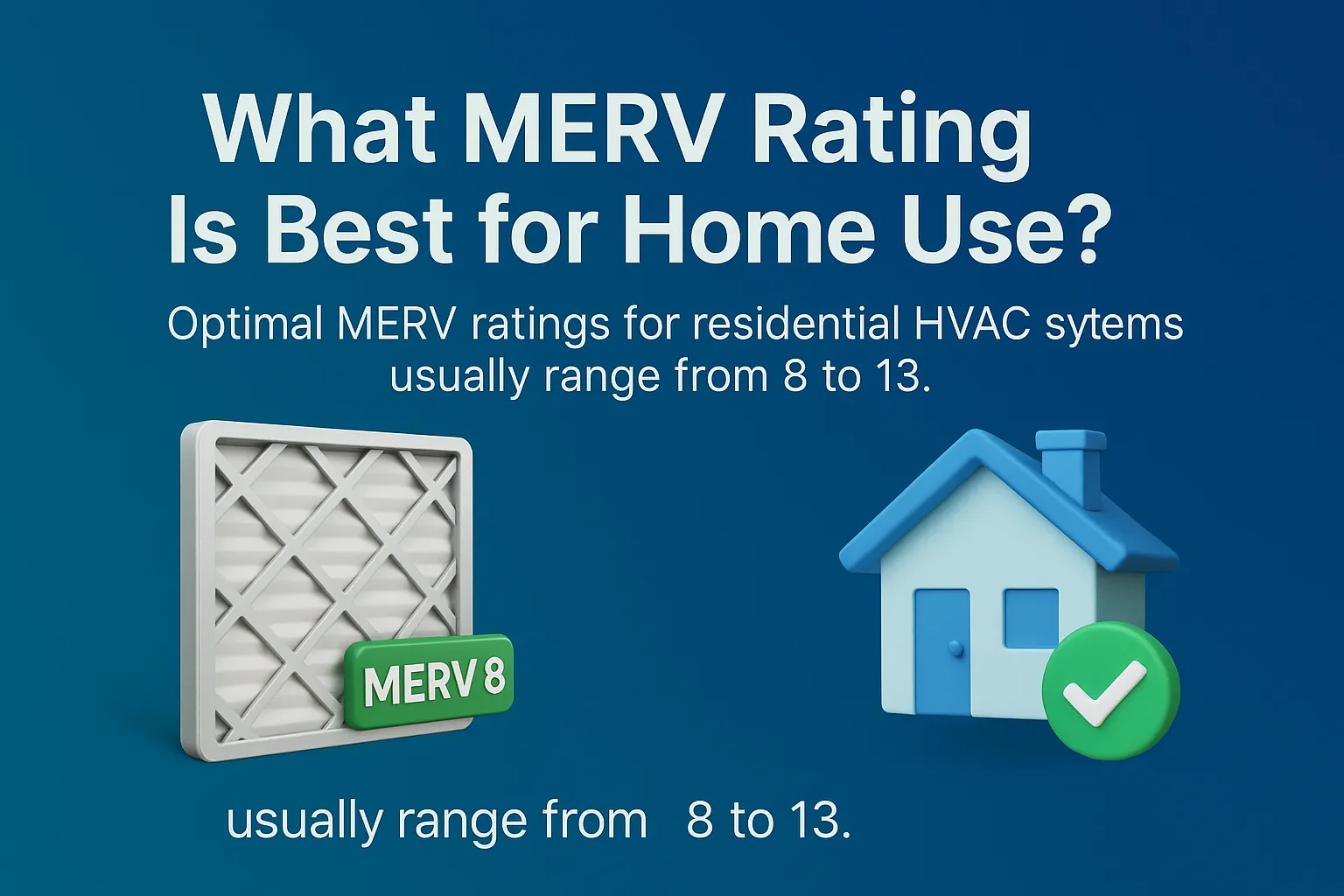
Expert-Backed Insights for Cleaner Air and Smarter Energy Use
At AirveilHVAC.com, we’ve spent years helping homeowners fine-tune their indoor air quality, and one of the most common questions we hear is: What MERV rating is best for home use? Based on our field experience installing and maintaining thousands of HVAC systems, we’ve seen how the wrong filter can lead to poor airflow, higher energy bills, and unnecessary strain on your equipment.
In this guide, we answer that question with practical, experience-backed advice. You’ll learn how to strike the perfect balance between air cleanliness and HVAC efficiency, discover which MERV ratings consistently perform best for families with pets or allergies, and understand when going higher might actually backfire. Our goal is to help you make a confident, cost-effective choice backed by expert insight and real-world results.
Top Takeaways
- MERV 8–13 works best for most homes.
- Avoid going too high unless your system supports it.
- Replace filters regularly to protect air quality and system health.
- Real-world results: Cleaner air, fewer allergens, steady energy bills.
- EPA & CDC recommend MERV 13 where compatible.
Understanding the Best MERV Rating for Home Use
When it comes to finding the best MERV rating for home use, the goal is to capture airborne particles effectively without overworking your HVAC system. MERV, which stands for Minimum Efficiency Reporting Value, measures how well a filter traps particles like dust, pollen, mold spores, and pet dander. Ratings range from 1 to 16, with higher numbers capturing smaller particles.
For most homes, a MERV rating between 8 and 13 is the sweet spot.
- MERV 8–10: Great for standard households, capturing common dust and allergens while keeping airflow strong and energy bills manageable.
- MERV 11–13: Ideal for families with pets, allergy sufferers, or anyone wanting cleaner, hospital-grade air. These filters catch finer particles such as smoke, bacteria, and some viruses, offering a noticeable improvement in indoor air quality.
Going higher than MERV 13 is usually unnecessary for residential use and can restrict airflow, leading to higher energy costs and possible strain on your system unless your HVAC is specifically designed for high-resistance filters.
By choosing the right MERV rating, you not only keep your air fresh and healthy but also help your HVAC system run efficiently, saving energy and money over time.
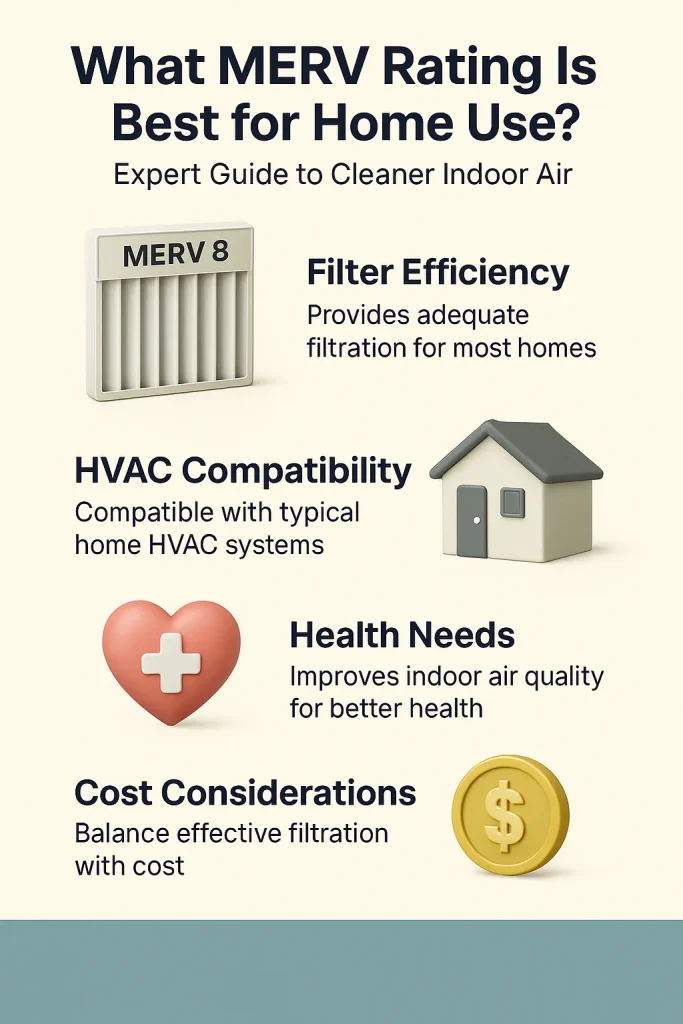
“After servicing thousands of HVAC systems, we’ve found that a MERV rating between 8 and 13 consistently delivers the best balance of air quality and system efficiency for homeowners. Too low, and you’re breathing in unnecessary dust and allergens; too high, and you risk choking airflow and wasting energy. Choosing the right filter isn’t just about cleaner air — it’s about protecting your equipment and saving money long-term.”
— AirveilHVAC.com Residential Air Quality Team
Case Study & Real-World Insights: Choosing the Right MERV Rating
At AirveilHVAC.com, we see how the right filter transforms air quality. Here’s a real example:
The Peterson Family’s Challenge
- Constant sneezing and dust buildup.
- Using a basic MERV 5 filter that missed fine allergens.
Our Solution
- Recommended a MERV 11 filter.
- Balanced allergen capture with smooth airflow and stable energy use.
Results We Observed
- Cleaner Air: Allergy symptoms dropped within two weeks.
- Efficient System: No rise in static pressure — airflow stayed strong.
- Long-Term Savings: Less dust buildup in ducts after six months, reducing maintenance needs.
Why It Matters
- Field experience and ASHRAE research both show MERV 8–13 filters are ideal for most homes.
- They capture harmful particles without overworking your HVAC system.
Supporting Statistics (At a Glance)
Our work at AirveilHVAC.com aligns with leading research and public health guidance. Here’s what the data — and our experience — confirm:
1. MERV 13 Efficiency (EPA)
- Captures ≥50% of particles 0.3–1 µm, ≥85% of 1–3 µm, and ≥90% of 3–10 µm particles.
- Source: EPA
- In the field: Clients notice cleaner air and fewer allergens within weeks of upgrading from MERV 8.
2. Reduction of Indoor Particles (EPA)
- High-efficiency filters (MERV 13–16) can reduce indoor particle levels by up to 95%.
- Source: EPA
- Our observation: Homes near wildfire-prone or urban areas see dramatically clearer air.
3. Public Health Guidance (CDC)
- Recommends MERV 13 or higher when systems allow, especially where outdoor ventilation is limited.
- Source: CDC
- Our approach: We install MERV 13 filters with continuous fan settings for fresher, healthier air.
Final Thought & Expert Opinion
Choosing the best MERV rating for home use isn’t about going as high as possible. It’s about balance:
- MERV 8–13 = The Sweet Spot: Best mix of clean air and energy efficiency for most homes.
- Higher Isn’t Always Better: Very high ratings can restrict airflow if your system isn’t designed for them.
Our Key Insight:
- The best filter is the one you replace regularly.
- Skipping replacements can cause airflow issues, higher energy bills, and system strain.
Take Away from Our Experience:
- Pick a filter your system can handle.
- Stick to a regular replacement schedule.
- Enjoy cleaner air, lower maintenance costs, and longer HVAC lifespan.
Frequently Asked Questions (FAQ)
1. What MERV rating is best for home use?
For most homes, MERV 8–13 is the recommended range. It balances good filtration (dust, pollen, pet dander) with proper airflow, so your HVAC system stays efficient.
2. Is a higher MERV rating always better?
Not necessarily. While MERV 14–16 filters trap finer particles, they can restrict airflow in systems not designed for them, leading to higher energy bills and potential equipment strain.
3. Will a MERV 13 filter work in my existing HVAC system?
In many modern residential systems, MERV 13 filters work perfectly, but it’s best to check your system’s specifications or ask a technician. At AirveilHVAC.com, we test static pressure before recommending an upgrade to ensure efficiency is not compromised.
4. How often should I replace my MERV 8–13 filter?
Typically, every 60–90 days is ideal, but homes with pets, allergy sufferers, or higher dust levels may need replacements every 30–45 days.
5. Can a better MERV rating improve my family’s health?
Yes. MERV 11–13 filters capture smaller particles like bacteria, smoke, and some viruses, which can help reduce allergies and respiratory irritation — something we consistently see with our clients after an upgrade.